Thursday, November 17, 2011

Kevin Arnold and the Meaning of Life

Contrary to popular belief, the dude in the glasses is NOT Marilyn Manson
By Josh Corman

Sometimes, God gives you a gift so unlooked for that you can hardly verbalize your thanks. That’s how I felt when I saw that Netflix had made The Wonder Years available in its entirety.

Sure, it doesn’t have Joe Cocker’s cover of “With a Little Help from my Friends” over the opening credits (soundtrack copyright complexities are the reason why the show still hasn’t seen a DVD release) and not a minute of it is in HD, but The Wonder Years was the first real television show I ever loved, and I’m thrilled to have it back.

For those unfamiliar, The Wonder Years follows a somehow world-weary eleven year-old named Kevin Arnold through his youth, starting in 1968. The show aims to be at once a nostalgic trip through the late sixties’ cultural upheavals and a sort of suburban bildungsroman. Our hero Kevin narrates the entire series from the distant future, offering the audience wry insight into his own awkward pubescent development and waxing philosophical about the nature of love, family, youth, loss, change, and fear. Every episode, at one point or another, veers frighteningly close to irredeemable cheesiness. Somehow, though, it always seems to pull it together just when it matters most, because, at the end of the day, The Wonder Years’ sincerity made up for its flaws (this sentence is exactly the sort of feel-good platitude Kevin’s adult narrator persona loved to close episodes with).

Yes, The Wonder Years taught me a lot. I learned about the Vietnam War and Buffalo Springfield in the same episode. I learned about RFK, Gloria Steinem, The Byrds, and Woodstock. But, even more remarkably, I learned that things don’t always work out the way you want them to, even on a sitcom. The series ends after Kevin’s first and truest love, Winnie Cooper, rejects him. He then loses all his money and his car in a poker game and, dejected and defeated, returns to his parents’ home. I saw this last episode when the show was in syndication, and I remember my outrage. Kevin and Winnie are meant to be together. How could this happen?

Now, of course, I get it. Not getting the girl, suffering the misery so that the good times mean so much more, blah, blah, blah. It was this sort of battered wisdom I looked forward to when I sat down the other day and knocked out a few episodes. The first two were just as I remembered: funny, a little hokey, in love with its setting. Then, I watched episode three, in which Kevin goes to work with his dad, Jack.

Basically, Kevin watches Jack come home from work, exhausted, day after day. And day after day, Jack brushes past his family, sits in the dark of the living room and watches television, where he demands peace and quiet. Wondering what makes his dad so angry every day, Kevin asks Jack about his work until Jack invites Kevin for a day at the office. Kevin watches his dad, amazed at the prowess with which he manages his employees at a manufacturing and distribution office.

Over coffee, eleven year-old Kevin asks his father when he knew he wanted to be a manager overseeing distribution at Norcom. Jack laughs and tells his son that he got an internship at Norcom one summer during college, and that he’s worked there ever since. One thing led to another and all that. Jack explains that what he really wanted to do was captain a ship. Freighter, ocean liner, tanker, it didn’t matter to him. Jack tells his son about the romance of being alone under the stars, using the sky to guide your way home and how the sea has fascinated him since childhood.

Soon after their conversation, Jack’s boss dresses him down in front of Kevin and the rest of the office, and Jack’s daily frustrations are suddenly much easier for Kevin to understand.

My dad frequently came home frustrated and distant, too. He wasn’t often in town, but when he was, he rarely wanted to rise from his recliner to play HORSE or throw around a baseball. Mostly, he wanted to be left alone after a day’s worth of annoyances and petty problems and fatigue.

I never asked my father when he decided he wanted to manage clean-up crews for his father’s environmental services company. I bet he would have answered much like Jack. One thing led to another. Like Kevin, I watched my father’s seemingly inscrutable behavior and wondered why he wasn’t a better dad. Unlike Kevin, I never understood how much of himself my father had given up by working where he did. Kevin realizes the element of greatness in his father that I never saw in mine. It’s an ugly sort of heroism, grinding away, day after day, so that your children can have different opportunities than you had, opportunities like, say, writing memoirs and contributing to websites and theology books.

The third episode ends with Kevin and Jack in the back yard, looking through a telescope at the stars. Jack points out a few constellations to his son, and Kevin peers into the telescope with a renewed appreciation for who his father is.

Kevin doesn’t verbalize what the audience must be thinking by the end of the episode, that we all wish Jack had shown the courage to shun the security of his job with Norcom and captained that ship after all. But that’s really beside the point. We’ve all made choices we can’t un-make, and we’ve all had to consider the sometimes odious consequences of those choices. In those moments, the only way to stay sane is to understand that what could’ve been is no longer in play, and our focus has to be on making sure that our next choice is a good one. In Jack Arnold’s case, the regrets are real, but they’re outweighed (at least for the audience), by the willingness he’s shown to endure what must often feel like a miserable life for the sake of his family. Whatever his flaws, he’s doing something few people have the constitution to do.

The Wonder Years wore its heart on its sleeve, but cheesy or not, there isn’t a whole lot about that show that rings false, and at the end of the day... ahh, just do yourself a favor and go watch a few episodes.


Friday, November 11, 2011

A Reading Year: Past, Present, and Future

By Josh Corman


I’ve read a lot this year. Once I finish the book I’m currently reading (Michael Chabon’s fantastic The Amazing Adventures of Kavalier and Clay), I’ll have knocked out twenty-seven novels, two biographies, a collection of essays, and one autobiography-slash-writing memoir (Stephen King’s On Writing).

This flurry resulted from equal parts New Year’s Resolution and spousal ultimatum. My wife, around about last Christmas, had the audacity to ask me how many of the books adorning my swollen shelves I had actually even read. Incensed, aghast, and secretly ashamed, I actually marched upstairs and started counting loudly. This was an unwise strategy, as I soon found that I would be swallowing the humble pie I had been so eager to prepare through my exaggerated display. I stopped shouting when I got to twelve. By thirty-eight I was positively morose. I turned from the shelves and sulked downstairs, where I pretended to busy myself with some earnest kitchen chores (Genius, I thought, because the last place my wife would look for me would be in the kitchen, cleaning up). When Sara came around the corner, eyebrows raised in an expression of barely repressible glee at what she could only assume was my near-total humiliation, I was trapped. But, since the best offense is a good defense: “How many I’ve read isn’t the point,” I said. “Books aren’t like hamburger: you don’t buy just what you’re going to use in the immediate future. Collecting books that you know you’ll want to read later on is half the fun.”
 You’ll be as shocked as I was to find that this eloquent speech made little impression on her. She simply straightened up, like a dutiful bailiff addressing a court room. “You are hereby forbidden to buy even one more book until you’ve finished reading all the ones you’ve bought and haven’t read yet.”
In a court room, so stern a verdict would cause the defendant to seek comfort from his spouse. Well, this is awkward.
Simultaneously devastated and emboldened by the verdict, I removed every unread book from my shelves upstairs and deposited them in a cabinet downstairs. Seeing them isolated like that, the task ahead of me didn’t seem so unmanageable. That very day, I pulled my most recently purchased book, David Foster Wallace’s Infinite Jest, from its new home and started in (it says something, I think, about the nearly radioactive degree of my defiance that I chose first an 1,100 page doorstop that necessitated almost constant dips into an often insufficient dictionary).
The ultimatum gave me a kick in the pants that, in retrospect, I clearly needed. 2010 had been a lean reading year for a number of boring reasons, and I had drifted pretty seriously from my most beloved hobby. Reading and I fell back into rhythm without much hesitation, and I ripped through book after book, tracking my conquests in a little notebook I had heretofore been unable to find a good use for. I finished Infinite Jest (the best book I’ve read in a long time and well worth the challenge), The Brothers Karamazov, Light in August, two Graham Greene Novels, two National Book Award finalists (Franzen’s much-hyped Freedom and Jennifer Egan’s inventive, even masterful, A Visit from the Goon Squad.) I read Pynchon and Coetzee and Atwood, Ishiguro and Eggers and Hardy, Bolaño and Marquez and Murakami. I’ve even dabbled in Joyce’s Ulysses, although admittedly, I’m not so much reading it as parsimoniously inching through it with an accompanying podcast. In any case, I’ve read a lot.
At some indeterminate point, probably around the time we dropped cable television to save some extra money, the strict terms of Sara’s ultimatum were softened, and I began buying books again, adding to my depleted but still substantial stack in the downstairs cabinets.
The summer was, understandably, a high point in terms of consumption (an ugly word, but apt, in truth), and when I went back to work in the fall, the swoon I anticipated never occurred. I just kept going. Now, in November, I’ve read nearly 13,000 pages, about 414 pages per book. I’ll probably finish Kavalier and Clay this weekend – only 150 pages to go – and then, I’ll have another decision to make. Which book next? All year, I’ve plotted out a course, mixing contemporary and classic, fiction and non-fiction, long and short as a way to keep every book fresh. But now, ten months into my sentence, its original objective is less pressing (the cabinets are still half-full), and I feel satisfied with – if you’ll forgive the grandiloquence – my accomplishment. In fact, It’s been months since I felt encumbered in any way by the confinement of Sara’s proclamation. And so, rather than devour any more of the masses of unread books (waiting, I like to imagine, like dogs at the pound to be selected and loved), I’m going to do something I haven’t done in a long while: re-read an old favorite.
Typically, I don’t re-read (despite Nabokov’s urgings). I’m more aware than ever of how many great books there are, and how many of them I haven’t read, and it’s always seemed like re-reading cheats me of discovering something new (that all this time spent with my face buried in books could have been spent playing with my son, giving back to the community, or becoming a better husband is neither here nor there, I promise). But really, the choice between reading or re-reading is not a choice between discovery or stasis. Re-readers often claim that they catch, comprehend, and connect much more in a book the second or third time through. I have found that this holds true, even in my limited re-reading experience. Of all the books I’ve read more than once (The Harry Potter series, The Lord of the Rings, The Adventures of Huckleberry Finn, Of Mice and Men, Fahrenheit 451, 1984, The Grapes of Wrath, The Road, High Fidelity, Watchmen, The Lord of the Flies, and Wise Blood), more than half were re-read for academic purposes - either as a teacher or student, and so only kind of count. In each of those, I was drawn to new and different elements, ideas, sentences, and phrasings. I don’t regret a minute of the process.
A good book, the way I see it, may endure a single exposure, but a great one should stand up to scrutiny time after time. Is it as engaging? As revealing? As true? If so, you’re probably looking at a personal classic – every book I listed above meets the criteria for me.
Now it’s time for a test. For years, I’ve called The Lord of the Rings my favorite book, and I’ve meant it every time. I first read it in high school – just after the initial thrill of my late discovery of Star Wars was wearing off – and again in college, right around the time Peter Jackson’s The Return of the King came out. That means it’s been eight years since I read my favorite book. That’s too long. I need to revisit Tom Bombadil and Lothlorien, Emyn Muil and the tower of Barad-dûr. After a long, rewarding year sailing the rough, thrilling seas of unread books, I deserve a chance to kick back and float down the lazy river of a comfortable, well-worn tome.
Let me go so far as to suggest that you do the same as 2011 comes to a close. Go back to your shelves (or that unruly pile that you trip over a few times a week) and take a repeat trip through a book you love. Think about it: Winter is coming (for those of you in Los Angeles, just pretend like the word Winter actually means something), and the time for hot tea, warm fires, and heavy blankets is upon us. What better time to curl up with an old friend.
The only question left is: Which book is calling your name?


By Josh Corman

Thursday, November 10, 2011

High Fidelity: A Response

By Luke Dornbush 

Editor's Note- The following is a response to my piece A Beautiful Mess: The Broken Rules in High Fidelity. If you haven't read it, go check it out. In that piece, I assert that despite the fact that the film High Fidelity breaks a number of storytelling conventions, it still works. My piece focused on the rules that it breaks, leaving open the question of why it still works. Luke is here to answer that question. Enjoy.


High Fidelity. It’s unconventional and somewhat confusing. As Jonny so eloquently pointed out in his original post, there are numerous reasons this movie shouldn’t work, at least on the surface. But let’s look a little closer for a minute.

Yes, High Fidelity breaks lots of “rules” about exposition and talking to the camera, but the exposition isn’t really exposition in the purest sense. Exposition is typically defined as heavy handedly telling the audience something they need to know, usually because you are unwilling or unable to convey the important information any other way. It’s a crutch, and as a writer who has done it myself, I feel there is no excuse for it. There is always a way to tell the story without it if you can navigate it.

What happens in High Fidelity is really more like one-sided dialogue. John Cusack’s character, Rob, employs all the rules of good dialogue when addressing the camera. Subtext is rife throughout. He’s not telling us about his “Top 5 Breakups” to tell us facts about the character’s past because the writer can’t think of a better way to convey the information; he’s telling us to show us something about the character. Every story, and even the way he tells each one, tells us about the character. The way he talks, the point of view he has in the story—they reveal the character just as if he were talking to any other character in the movie.

But the real reason I believe that High Fidelity works is because it only gives the illusion of being disjointed, when in fact it is secretly and subtly following a simple, three-act structure. At first it seems like they jump in at page ten with an inciting incident. That’s what I thought the first time I watched it. But then I watched The Matrix.

At the beginning of the Matrix, we don’t know who any of the characters are or their relationships to each other. We know two things: the guys in the suits are the bad guys (because what else do bad guys wear?) and, consequently, the girl they’re shooting at is who we need to root for. We don’t know what her goals are. We don’t know why she’s being shot at. We just know she’s running for her life, and we sympathize with her.

In High Fidelity, we’re similarly thrust into the action. We instantly identify with Rob, even in the midst of a breakup for which we have no context. He’s the dumpee; obviously she’s a bitch. Over the course of the movie we learn that he’s no angel himself (one scene in particular comes to mind), but by then we’re firmly in his camp. First impressions, good or bad, are hard to overcome and can be essential to a story, especially when a writer centers his story on a particularly unlikeable character.

From there, like any other movie, we are introduced to the characters, and the plot begins to form. You may not notice it, as events sometimes seem to just happen for no reason, but your subconscious recognizes it and is able to follow it as a story. You find yourself enjoying something that should be aggravating. You’re understanding something that should be confusing. Ironically, that confuses you.

And so Act I ends when Rob decides there might be a common thread he’s missing between all of his worst breakups and embarks on a journey to find out what that might be. It’s a clearly stated goal that will take him all of Act II to pursue. He even works against a ticking clock. It’s never stated plainly, as good movies rarely are so blatant, but every viewer senses it. It’s the window he has to possibly reconcile with Laura. Rob needs to get his shit together before he loses her for good.

We know this because Rob’s problems are skillfully revealed by unconventional means. He indirectly tells us directly. In his recounting of his past breakups (and especially as more details come out in his recent breakup), the viewer can clearly see his mistakes/character flaws that doomed those relationships from the beginning, things that strangely baffle the very man who is recounting all of it to us.

It’s like listening to your confused, twenty-one-year-old friend lament her failed relationship with a drug addicted, thirty-five-year-old guitarist who lives in his parents' basement and doesn’t talk about anything except how big his band will be someday. Ok, maybe not that obvious, but you get the point. Now we know something that the protagonist is going to take the next hour discovering.
Before continuing, I feel I should point out that the breakup story with Laura is different from the rest of the “Top 5” list because Rob has to learn from his past mistakes in order to fix things with her. The couple wasn’t doomed from the start; it was his inability to learn from his past that ultimately drove them apart. We also inherently recognize this, which is why we subconsciously start rooting for them to get back together.

But this is how the movie stays two steps ahead of the viewer. We have already embarked with Rob on his journey of self-discovery and growth before the movie tells us why we’re on the journey at all. We, the audience, are Joan Cusack, who plays Laura's best friend Liz; after the fact, we are getting important information that reveals who Rob really is and why he and Laura broke up.

As Act II continues and Rob begins to internally accept that he has no one but himself to blame for his past failed relationships (from mistakes he made in the relationships to mistakes he made in picking the girls to begin with), we are sidetracked by events in the real world. Our subconscious—the one that so smartly figured out there was a story in the first place—gets it completely wrong here. It thinks this is a romantic comedy and tries to fit it into that mold. Guy loses girl, guy realizes he made a mistake, guy wins girl’s heart in the end.

But we’re wrong. High Fidelity is a late coming-of-age drama about growing up in a world that is different than we were told it would be (a story that resonates with every generation but, I feel, with X-Y in particular). It’s a story about letting go of disappointment and taking responsibility for our actions, taking positive steps for our lives. It's about pulling ourselves out of that post-youth rut and becoming adults. This is part of the reason the story looks so disjointed (but doesn't feel that way): we’re trying to fit events into the wrong picture.

When Rob admits that Laura is one of his “Top 5 Breakups,” it’s not him realizing how much he misses her and wants her back. He isn’t realizing that his past relationships can’t measure up to what he had with her. He’s realizing that he’s the problem and accepting responsibility for his part in the breakup.

It’s his growth from adolescence to adulthood. It’s his willingness to be vulnerable with himself and admit that he is hurt. Of course he still has a long ways to go before he begins to put Laura ahead of himself (where he ends up in the last scene of the movie), but it’s a major turning point in that journey. The confusion is added to at the end of the second act, however, when the drama and rom-com appear to overlap briefly. But remember what the plot is: man grows up, not man gets girl. The true darkest moment isn’t when it looks like all is lost and he runs out of the funeral for Laura’s dad. It’s when they get back together and it appears that nothing has actually changed. He’s still stuck in arrested development, doomed to repeat the same mistakes. That is the “all is lost moment,” the “dark night of the soul.” Even though he’s got the girl and seems happy, this is the hero at his lowest.

The climax is his extremely unconventional proposal in the bar. It’s at this point that all he has learned comes to a head. Rob hits on a cute girl, but it feels different this time. He knows he can’t go back to the way things were, with “one foot out the door” all the time. He is tired of his old life and wants something more. More importantly, now he knows how to get it. His closing monologue confirms the change in him and assures us that things will be different this time around.

I believe that Jonny is absolutely correct in his analysis. The movie is almost entirely about an internal conflict and self-discovery, and that’s against the rules. But, as always, rules are meant to be skillfully broken. The movie does a great job of subtly externalizing the internal conflict throughout, even when that's not its apparent intent. So why do we like High Fidelity when our brains tell us we shouldn’t? Because it’s smarter than we are.


By Luke Dornbush

Tuesday, November 8, 2011

Measured in Wins and Losses

Coach Wright with U.S. U-18 player Arin Gilliland

by Josh Corman


I’ve missed more than 9,000 shots in my career. I’ve lost almost 300 games. 26 times, I’ve been trusted to take the game winning shot and missed. I’ve failed over and over and over again in my life. And that is why I succeed.
- Michael Jordan

My friends who played soccer for Kevin Wright at West Jessamine High School always gave me the impression that he was a sort of mad scientist: the most intense man in the world, obsessed with competition and conditioning to near sociopathic levels. Many times I detected ringing notes of resignation in their voices when they spoke about practices, where they would run around a quarter-mile track carrying bricks in each hand, push enormous tires up steep hills like so many exhausted Sisyphuses, and play maniac games of short-sided soccer - often with Coach Wright in the middle of the action, yelping wildly and knocking over any player who dared tangle with him.

This manic intensity manifested itself in a team slogan that displayed both the punishing quality of the work Coach Wright’s teams put into their preparations and the hardened pride that each player took in living through them: “Tough as Nails.” Coach Wright ensured that even if his players lost, they would never do so because of fatigue or a lack of toughness. Simply put, Kevin Wright hates to lose and demands the sort of fevered dedication from his players usually reserved for college football coaches in the south.

When I came back to West Jessamine as a substitute teacher, Coach Wright (who barely remembered me from my days as a student) and I quickly developed a friendly relationship founded on our respective sports fanaticism. When I subbed in the gym (a place where Coach Wright’s math classes often mysteriously find themselves), we had involved, animated discussions about pennant races, the BCS, the NCAA Tournament, and any other major sporting event we could cover.

Once, when Coach Wright requested me as a substitute, I passed the time students spent working by reading the dozens of old newspaper clippings he had laminated and hung behind and around his desk. The articles stretched from his playing days as Montgomery County’s goal keeper all the way to his tenure as West Jessamine’s girls’ soccer coach (he has coached the girls’ team since his daughter was a freshman in 2007). Many of the articles detail the sorts of exploits that a coach or player may want to remember forever, but just as many articles describe the sort of heartbreaking losses and shortcomings that most people wish they could excise from their memories altogether. Close losses to bitter rivals, poundings at the hands of highly-favored opponents, penalty shoot-out defeats in regional title games, and career-ending shock upsets are all displayed just as noticeably as the biggest successes of Coach Wright’s career.


This panorama, equal parts elation and misery, puzzled me. I’m used to hearing coaches and other motivational-types shouting about the power of positive thinking and exclaiming that the surest way to succeed in any field is by removing negativity, not dwelling on mistakes, and focusing on positive outcomes, and I guess I assumed that every coach had adopted those tenets. The flaw in this view is that by erasing failure from our memories, we lose the perspective necessary to properly appreciate success. Culturally, we come to believe that failure must be eradicated because it is painful, forgetting that failure, more assuredly than almost anything, leads us to a greater understanding of what it takes to improve ourselves.

Winning and losing are a part of sports, but it’s easy to forget that they’re a part of life, too. We need to understand that not everybody can succeed all the time, and when we fail, we need to remember what that feels like and what that failure taught us about ourselves. This is as true in government and education and business as it is in sports.

To Coach Wright, keeping these articles isn’t dwelling on negativity, it’s simple honesty - a fair sampling of the most meaningful moments of his career. His clippings - the good and the bad - are there because he wants to be reminded daily of his capabilities and his limitations, not because his wins and losses define him, but because he wants to get better, and he knows that wouldn’t happen if he didn’t pause to reflect on those sour moments of defeat as often as the sweetest moments of glory.

Last Thursday, I sat in the stands at Dunbar High School’s soccer complex, watching our girls’ team play in the state tournament semi-finals, the biggest game in our program’s history. Cold rain pelted the thousand or so spectators and bitter winds swirled through the bleachers’ cold metal skeleton as I watched West Jessamine fall in defeat to Notre Dame Academy, who would, two nights later, win the state championship. As the contest slipped away, I watched Coach Wright pace the sidelines, the frown evident on his face even from across the pitch. As sad as I was for the girls, many of whom I’ve taught, I knew that Coach Wright wouldn’t let them beat themselves up about it, and that as bad as it hurt in that moment, in ten years the ache of that defeat will be dwarfed by the profound sense of growth that comes from being a member of a tightly-knit team, suffering a hurtful loss together, and coming out stronger on the other side. I don’t know that I could say that if I didn’t know Coach Wright, if I didn’t know that on Friday morning, he bought a copy of the paper and started cutting.


Monday, November 7, 2011

The Seven Hottest Babes of the 80's and Early 90's

By Jonny Walls

The following is a response to Emily's hilarious and well received piece, Seven 80's Studs Who Taught Me How to Find a Husband.

If you haven't read hers yet, go catch up, and I'll meet you back here. Go on.

While Emily's list was strictly confined to the 80's, I, knowing that the bounds of babe-dom can't possibly be so restrained, have decided to welcome the early years of the 90's as well. I know this may seem like a bit of a cheat, but clearly, I had no choice. After all, Aladdin wasn't released until 1992.


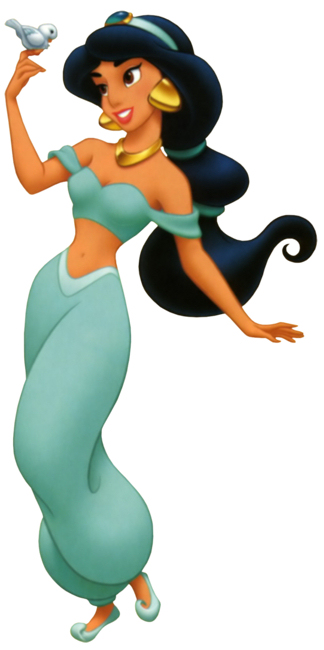
7. Princess Jasmine- of Aladdin
Would you look at that hip to waist ratio? 

Have you seen my Dad? My hotness literally defies physics.

I never, ever, ever went through a "girls are yucky" stage. I mean, I had my first girlfriend, complete with verbal engagement, at age three. (The engagement fell through.) But those hips woke up something new inside me. I've heard the "classy, smart" argument for princesses like Belle, but you know what? At age nine, I had no use for classy or smart. You know what I did have use for? Sexy, exotic princesses who pranced around baring their mid-driffs all day. It was Jasmine, not Britney Spears, who made the crop-top everyday acceptable. For that, I thank her.

6. Danielle Fishel- Played Topanga on Boy Meets World
We've done hips, but how about those lips? 

For the record, I'm way out of Ben Savage's league in real life.

Behold, fair readers, the best thing about Friday nights for the majority of the nineties. We tuned in for Ben Savage's nervously clumsy hijinks. We came back again (and again and again and again) for Topanga. Her nerdy-friend-turned-sexy-crush thing was irresistible, and just the thing we all dreamed of. (Cha -ching!) Thank God It's Friday? You bet your ass.


5. April O'Neil- of Teenage Mutant Ninja Turtles the Cartoon
April was so hot that even animals were attracted to her. It takes a special brand of sexy to trump genus grouping.


Tonight's top story: My blouse is coming open and you love it.

This bold, bodacious, on-the-beat babe provided the injection of estrogen that the TMNT so dearly  needed. She was the paragon of sultry femininity against which the ass-kicking of the Turtles could take clearest form. And talk about low maintenance. She's a working gal who comes home tired and all talked-out from having yapped in front of the camera all day. Mind numbing shopping excursions? Forget about it. See that yellow jumper? That's it. Stock up on laundry detergent and dryer sheets and you'll be set for life. Repeat after me 'cause this is all you'll need: "No, that jumper doesn't make you look fat. That jumper makes you look amazing." You're all set, cowboy, and better yet, it'll be the truth. 

4. Vicki- of Small Wonder
Vicki was a cute, brunette robot who was programmed to cook and clean. Next.

Mechanical hotness. Very ahead of its time.


3. Stephanie Tanner- of Full House
I'm a white protestant from the Bible-belt who grew up in the 80's and 90's. To exclude Stephanie from this list would be a downright travesty. The "Michelle Twins" were still toddlers and D.J. was too busy running around with Aladdin.

That's right. This guy was "The Diamond in the Rough."


But Stephanie had it going on. Stephanie had looks, character, and spunk. She was never afraid to call out rude people. And she looked kickin' in curls.

The shoe represents kicking rudeness' ass.

2. Princess Leia- of Star Wars
When I saw Princess Leia for the first time in her white, sheet-turned dress getup, my four-year-old curiosity began stirring like a Wompa coming out of hibernation. When we got around to Return of the Jedi, however, and I saw this...

When you're finished choking Jabba, could, um...I get a turn in there, maybe?


...I was insatiable as the Rancor (and twice as confused). This may be the most obvious choice on my list, but there's a reason for that. In that dingy hole of villainy and scum, even amidst awesome things like the force, droids, and lightsabers, we all had eyes for only one thing. (Well, a few things.)

1. The One Girl From My Neighborhood- in My Life
Everyone has experienced that new girl who moves into town and knocks your socks off. But there are others, who, for some reason, it takes a little longer to notice. One such girl, when I was around fifth grade, moved into my neighborhood. I didn't see it at the time, but as I grew older and wiser, I came to realize what I was missing out on. I always wonder what became of her. Actually, isn't this just the type of thing Facebook is for? Hold on...


Here she is!
Maybe I should give her a call?


By Jonny Walls

Friday, November 4, 2011

He Said-She Said Episode 1: The Merits of Pleasure Delaying

Welcome to the first ever He Said-She Said. In this series, we will explore a number of issues where Emily and I have clashing points of view or two sides to the same story. We choose a topic together and then write our respective views separately from one another, having no knowledge of the other's specific focus points. Any crossover is purely coincidental (and for this particular He Said-She Said, remarkable).

Tonight's topic: Delayed gratification.

He Said:

"(Love is)...the sour and the sweet. And I know sour, which allows me to appreciate the sweet."

-Vanilla Sky

I don't think there's much worth having unless it's worth waiting for. Two things often said about me (Not by me, mind you, about me):

1. I'm a pleasure delayer.

2. I don't do anything unless I can do it all the way.

Few would argue with the virtue of only doing something if it can be done right when applied to the BIG things. Would any wise person half-ass an entire film production? Of course not. As we grow and mature, we learn that instant gratification does not satisfy for anything that really matters.

But what about the menial? The everyday things, like eating, showering, watching television?

For example, if I buy a new video game that I've been dying to play (which usually means I've already been waiting months, if not years, for it to come out), I'll come home, put it aside, and make sure I've finished everything else that needs to be done that day before I break it out and play. That way, I can  think about it all day and build my anticipation to a fever pitch, and then when I do finally give in and play, I won't have any nagging responsibilities floating around, subtracting from my enjoyment.

A younger, less wise person would no doubt burst in the door and rip open the package and park himself right in front of the television for hours, putting off things like multiplication tables and chores (because only a child would behave this way) until later. Maturation and wisdom teach us that my way makes the pleasure even better when it comes.

This is where Emily and I differ. I say a healthy dose of delayed gratification can lift the minutia of the everyday grind into a host of little pleasures.

Let's start with a pretty obvious one. Around Thanksgiving of '09, due to our busy schedules, we got behind on watching The Office and 30 Rock, two shows we both love. (Also, I know watching television isn't exactly part of "the grind," but it's a good example to start with.) Rather than just pick up with the show after the Christmas break when our schedules had slowed down, I insisted that we wait until we had caught up on all missed episodes first.

"But I want to watch it NOW!" Emily raged, sounding more than a little like Veruca Salt.

 
Skip to 45 sec. to hear Emily.

"But Emily, my dear, you see, if you just wait and catch up on what we've missed first, the rest will be so much more rewarding. We'll appreciate these more if we have the full understanding of what came before them and led up to them. This is something that adults learn: if you wait and do things right, the experience is so much better."

She threw a tantrum, but I held fast, and she thanked me in the end.

Another example that one would think would be confined to our childhood days is the classic, time-tested, "Don't spoil your dinner." Emily's "philosophy," lacking the refinement and depth of appreciation possessed by me, is: "If I'm hungry, I should eat NOW." So what if we're about to have a delicious and expensive dinner in just under an hour. 

"But I'm hungry NOW." 

"If you just wait for dinner and eat it on an empty stomach, you'll enjoy it so much more. Embracing your hunger will only increase your appreciation for what you have."

"I don't understand these words. Me hungry. Me eat."

A steak eaten on a partially full stomach simply cannot be fully appreciated.

Let's take it a little further out there. I'm a shower man. (I don't mean this in the not-a-bath-man sense, I love a good bath too.) What I'm saying is, I love showers. It's quite possibly my favorite time of the day. This is why I fantasize not about having a mansion with vaulted ceilings and several Mercedes in the driveway, but rather about having a large, wide-open shower room with multiple, warm and wonderful shower heads.

There's literally nothing like a hot shower after a cold day. There's no other feeling quite like it. I like to go out of my way to create and enhance this experience, if possible. If it's cool, I'll sit around in my underwear for awhile and get nice and chilled before finally surrendering to a hot shower. It makes showering, what is otherwise a menial task, a wonderful experience. Harnessing all I can of my God-given physicality, I am able to take something menial and turn it into something pleasurable. It's what makes showering in the winter so much better than in the summer.

Emily, on the other hand, would just rather never be cold. She has no use for even a moment of discomfort. She'll stay bundled up right to the very ledge of the tub. She'll run the hot water before getting in to make sure there isn't a second of cold time between being dressed and being in the water. If she has to stand in the cold bathroom for even ten seconds, she acts like a cat held over water. I mean, I get it, it's uncomfortable being cold, but Emily, you can never appreciate a good hot shower like I can.

These are only a few examples, but I think my point is clear. By embracing the fringes of our physicality (read, our humanity) even in everyday situations like eating and showering, we can highlight and increase the potency of pleasure in our lives. It takes some small sacrifices, but it's worth it.

She Said:

He’s doing it again. We’re headed down the snowy roads of Western Kentucky on our way to his family’s Christmas celebration in Bowling Green. We’ve had a delightful, four-hour, Christmas carol-filled drive from my parents’ place in Indiana, and now we’re ticking off the last few miles to his aunt and uncle’s neighborhood. Any minute now we’ll be wrapped up in blankets and sipping hot chocolate on the couch with family all around. Any minute now we’ll be warm and cozy. Any minute now we’ll be happy. Right now, however, the windows are down, snow is blowing into the car, the heat is off, my teeth are chattering, and Jonny is grinning maniacally.

Is he a sadist? I wouldn’t go that far.

Did I do something that requires polar discipline? Not even close.

Is Jonny planning to carve ice sculptures with his hardened nipples in some sort of radical, experimental art project? Probably not.

Is he out of his mind? This is my best guess.

The reason the windows are down, the snow is blowing in, the heat is off, my teeth are chattering, and Jonny is grinning is because he is so excited to use his uncle’s enormous, steamy shower (a whole room unto itself) that he plans to increase the pleasure of his bathing experience by prolonging the pain of pre-shower existence. The colder he is now, the more he’ll enjoy the shower, the theory goes.

I would be ok with this, I suppose, if he did it on his own time far away from me—if, say, he were to tell me about it over breakfast along with Premier League soccer transfer news while I divide my distant thoughts between my cereal and Lavar Burton.

Yummy

That would be an acceptable living situation. Right now, he’s dragging me into his twisted world, and I’m finding deep wells of sympathy within myself for Lorena Bobbit. This is life with a pleasure-delayer.

Consider: When I take a shower, I turn on the water full blast for a good 20 seconds before I get in, just to ensure that the initial cold water from the pipes has time to drain completely. I close the window and door and trap the steam into my den of comfort. I keep myself wrapped in blankets until the last possible second; then I throw them off and step into the stream of water in one, fluid motion. I turn up the heat a few more notches. Since I prevent myself from getting cold before the shower, do I fail to appreciate the warmth? Are my showers miserable and laborious? Do I count down the seconds until I can get out? No, sir! I enjoy the shit out of my showers, and I submit my father’s 1993-2002 water bills as corroborating evidence.

Jonny calls his little disorder “delayed gratification” and likes to pretend that it’s an issue of patience, as though if I could get over my MAJOR character flaw of preferring comfort to discomfort, raindrops of gold would fall from the sky, water my fields, and produce gold corn and potatoes in harvest time. I know better. It’s not about patience at all. If it were, perhaps Jonny would exercise a bit more of his treasured virtue when he waits for me to curl my hair before parties. Perhaps he wouldn’t purchase a little birthday gift for himself just TWO DAYS before his real birthday instead of waiting to see if perhaps someone close to him might have already purchased that particular item for him and was excitedly waiting to give it to him. EVERYONE ON THE PLANET knows that you don’t buy anything for yourself in the entire month leading up to your birthday. Patience? Please. Ask any woman who has ever willingly (and inexplicably?) united herself with a Walls man if her situation requires a touch more patience than that of her peers. Walls women are paragons of patience.

No, the real issue is this: must we be miserable before we can be happy?

Jonny says yes. I say he’s insane.

I get where he’s coming from though, what with that string of girlfriends he went through before me (zing!).

All the same, Jonny, you’ve got a real point there. After all, you never listen to Nevermind without first going through Staind’s greatest hits. You wouldn’t dream of biting into a succulent lobster tail without downing a bowlful of your detestable baked beans beforehand. You regularly watch Bicentennial Man and Bicentennial Man: Special Edition back-to-back before going to the theater for a new movie. Oh wait, you don’t do those things? You mean you avoid Staind, baked beans, and Bicentennial Man because you don’t see the point in willingly wasting even ten seconds of your life on worthless tripe? Hmm.

The seconds of our lives tick by. Right now, I have fewer seconds than I had before I started arguing with Jonny about pleasure-delaying. I won’t freeze myself before a hot shower, I won’t eat steamed cabbage before chocolate, and I won’t spend another minute defending a position that is so obviously correct. There are too few seconds out there to go around purposely squandering them on discomfort. Uncle Tom’s shower be damned, I’m rolling up the windows.

Wednesday, November 2, 2011

A Beautiful Mess: The Broken Rules in High Fidelity

By Jonny Walls 


High Fidelity (the film) is a mess of broken rules and cinematic personal pet peeves. Despite this, I adore it. I proselytize on its behalf. I watch it repeatedly. I love every second of it.


How can it be? I mean, it should be simple logic, right? Modus Ponens. If P then Q. P is true. Therefore: Q.

P- If a film commits multiple personal pet peeves and breaks a number of cinematic rules that I strongly believe in, then...

Q- I won't like it.

This is true. Now, let's try it out.

P- High Fidelity commits multiple personal pet peeves, and breaks a number of cinematic rules that I strongly believe in, therefore...

Q- I love High Fidelity so much I'm a little attracted to it. (Head explodes.)

While there are surely explanations for this seeming breakdown in the fabric of reality, they are not the point of this essay. The purpose of this essay is to point out what these pet peeves and rules are and how they're broken. The speculation of "why", dear friends, is up to you.

Ok...maybe just a teensy bit of why I love this film:


The rules for storytelling in the film medium exist for a reason. Well written films hit important emotional beats and strengthen our sense of tension, empathy, surprise-- basically how much we care about the characters and what happens to them. If some punk-ass film student tells you he doesn't need rules, or the rules just hold him back, you have my permission to roll your eyes and possibly inflict some sort of mild bodily harm upon him. This person does not understand storytelling.

While there are always exceptions to these rules, (and times and places to "break" them correctly), I would venture a guess that somewhere between 99-95% of the films you've seen (depending on what type of movie watcher you are) adhere strictly to most, if not all of these rules.

Maybe you're aware of these rules. (I suspect some of our readers are.) But maybe you've never really thought about them. I suspect you would find that on some level you always sensed them, but you'd never considered them.

I was the same way.

To be clear, some people break these rules, and others toss them aside completely. But if you're going to break them, you'd better know them up and down first. You'd better be a master.

While some films ignore the rules altogether, High Fidelity is aware of them, and it follows some of them...sort of. What distinguishes High Fidelity from films that completely throw away the rule book is that, unlike movies like Waking Life and Before Sunrise, High Fidelity resembles a traditional film in many ways. It possesses the rules, it just wreaks havoc on them.

1. The narration. Is there any concrete rule of cinema that says "no narration?" Depends on who you ask, but I think the answer has to be no. While some would argue that narration is a storytelling crutch (and often, it is) some of the greatest films of all time use it, and do so masterfully.

But High Fidelity takes it to the next level. As you've already seen, the main character Rob Gordon, played by John Cusack, breaks the fourth wall and speaks directly to us throughout the film. It's an outright torrent of narration. Narration saturation. On paper it ought to be emotionally shallow and devoid of tension. But it isn't.

It's not just how Cusack narrates it either, it's what he says, which brings us to the next rule and one of my personal pet peeves.

2. All the men out there who aspire to screenwriting greatness, here is an area where you can learn A LOT from the ladies.

Good screenwriting is all about saying anything, and everything, except what you actually mean.

Hint, suggest, insinuate, and allude all you wish, but don't come out and say it. Trust that your audience is smart enough to get it for themselves, because that's part of the fun of watching a great film. We get to see and feel it all through actions and dialogue that is subtly laced with subtext, and we (usually subconsciously) decipher what the characters are thinking and feeling. We don't like to be told.

If Anthony Hopkins in Remains of the Day literally said, through dialogue, "Well, you see, character played by Emma Thompson whose name I don't remember, I'm actually in love with you but I haven't the courage or savvy required to tell you," the chemistry and sexual tension and mystery and humanity would be sucked away. It's like popping a balloon.

This is an easy trap to fall into for amateur screenwriters (I know all too well) because it's also essential that our characters' actions are motivated. Nothing kills the mood like arbitrary actions that only serve to move the plot along. So, what better way to fill our audience in on our character's motivations than by having the characters explain it? I'll tell you: Have them show it through their actions. Let the audience figure it out. It's tough, trust me. But it's better that way.

In High Fidelity, Rob is constantly telling us, directly, how he feels about these girls and why he's jealous of this guy and what he desires more than anything. He discloses all of his neuroses and explains why they hold him back from happiness. But it works. It's emotionally compelling. Somehow, we root and pull for Rob the whole way.

3. Three Act Structure- The three act structure isn't exactly Hollywood's best kept secret. But for those of you who don't know it, (very) basically, it goes like this:

Act 1 is the setup. It's where we learn all about the characters, the world in which this story is told and whatever back-story we need to be getting on with.

Act 2 begins when the "plot" really kicks off. It's that moment when some event occurs that propels the character/s into the story. It's Luke finding his Aunt and Uncle killed on Tatooine, compelling him to go and learn the ways of the Force. The remainder of Act 2 is a series of conflicts and setbacks the character must overcome, finally culminating in what feels like insurmountable odds.


Act 3 presents us with the solution for overcoming the conflict, whatever it may be. In Act 3, we will see the solution enacted, most likely see it succeed, we will have some sort of climactic showdown, and finally see how everything looks once the conflict is resolved.

There don't have to be battles and violence and overlords for these rules to apply. Romantic comedies and subtle dramas employ these same emotional beats, they just adapt to the tone of their respective genres.

High Fidelity uses the three act structure in the loosest sense. As my friend Luke observed, the movie seems to start with Act 2. At best, it's an Act 1, Act 2 mish-mash. The very first scene sees Rob dumped by his girlfriend. While we learn very quickly what kind of guy Rob is, what drives him, and why we should care about him, this primary event drives the rest of the plot: Rob dealing with rejection, specifically, with this particular rejection.

One could point to where the film breaks into Act 3, technically, (when his relationship looks to mend) but it's an event that just happens to Rob. Great stories, on the other hand, traditionally hinge on big, tough, decisions made by the characters. This can't be stressed enough. Choice is integral. If it's something that simply happens to them, the impact is weakened.

Rob doesn't make any integral choices. He comes to realizations (which he candidly shares with the audience), and he certainly changes by the end of the film (fulfilling the character arc criteria nicely), but the plot mostly just happens.

(Note- There is one semi-major choice that Rob makes well into Act 3 (can you figure out what it is?), but again, it doesn't move the plot in the slightest. It merely serves to illustrate how far Rob has come as a character. This is a classic example of how High Fidelity sort of plays around with the rules rather than breaking them outright.)

4. External Conflict- Go back to Star Wars. Consider the Galactic Empire's plan to destroy every damn planet in its path. Look at how the Empire is seconds away from destroying the rebel base when Luke saves the day. That's external conflict, baby: something you see and touch, with literal, physical consequences drawing ever closer and closer. The ominous, larger than life Death Star is the perfect symbol for this ever present danger, brilliantly conceived in its ability to convey visually the Empire's dominance and act as a literal conduit for the film's conflict.

And then consider High Fidelity. Sure, there's an annoying hipster new guy moving in on his girl, and there's...well...that's about it. The conflict in High Fidelity is all internal. It's not a literal threat outside of Rob's control that grows closer and ever more dangerous with time. It's his own neuroses, his own insecurities. This is a huge no-no (and a common mistake of student filmmakers), but High Fidelity simply doesn't care.

So how does it do it? How does High Fidelity manage to compel and entertain and provide insight and evoke empathy and stir emotions despite this mess of broken rules? Or maybe, God help you, you think High Fidelity doesn't work. If so, why? For the reasons listed above? For other reasons altogether?

I entreat ye fellow Infusers. Let's hear your thoughts. 

And finally, if you haven't seen High Fidelity, seriously, what are you waiting for?


By Jonny Walls